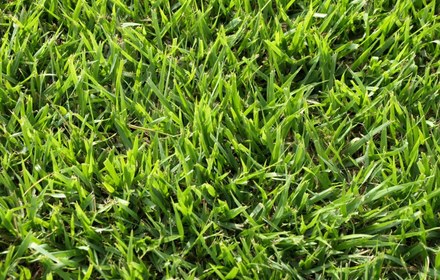
If we had to pick one grass to recommend blind, without knowing anything else about a Houston yard, it would probably be Palisades Zoysia. It’s consistently our best-selling variety, and local turf experts regularly rank it as the best-looking overall grass for this market — a rare combination of low maintenance, good looks, and genuine durability.
Palisades also proved itself in a way that matters a lot to Houston homeowners: it was one of the few Zoysia varieties that held up through the February 2021 freeze, when a lot of warm-season lawns across the region were badly damaged or killed outright.
Who Palisades Is Best For
- Most Houston yards, honestly — it’s the closest thing we carry to a universal recommendation
- Homeowners on clay soil who want a grass that handles it well without extra amendment work
- Anyone who wants a low-maintenance lawn without giving up a manicured appearance
- Households with kids or pets who need real foot-traffic durability
- Homeowners specifically concerned about freeze damage after the 2021 winter storm
Growing Conditions
| Factor | Palisades Zoysia |
|---|---|
| Sunlight | 6–7 hours |
| Drought tolerance | High |
| Foot traffic | High |
| Growth rate | Moderate |
| Maintenance level | Low |
| Coverage | ~450 sq ft per pallet |
Palisades’ deep root system is a big part of why it performs so well on Houston clay and handles drought better than most St. Augustine varieties — it’s simply better equipped to find moisture deeper in the soil profile.
Recommended Mowing Height & Frequency
Mow Palisades at 1.5–2.5 inches, every 7–10 days. This is one of Palisades’ biggest practical advantages: unlike Emerald Zoysia, it works fine with a regular rotary mower — you don’t need to invest in a reel mower to get good results, which meaningfully lowers the cost and hassle of maintaining it compared to some of our other premium options.
Zoysia in general is the slowest grass type to establish and to green up in spring, so don’t panic if your Palisades still looks brown in March while Bermuda and St. Augustine lawns nearby have already greened up — that’s completely normal.
Watering Needs
Palisades wants deep, infrequent watering once established — about 1 inch per week in summer, roughly half an inch in spring and fall.
- New sod: Water twice daily — once in the morning, once in the evening, never during midday heat — for 2–3 weeks. Zoysia roots more slowly than St. Augustine or Bermuda, so expect to need the full 3 weeks — don’t rush the establishment phase. Transition to the established schedule once a tug test confirms rooting.
- Established lawns: Cap watering at twice per week maximum. Overwatering established Zoysia is the leading cause of large patch disease, which is more of a risk for Zoysia than for our other grass types.
Fertilizing & MicroLife Recommendations
Palisades needs the least nitrogen of any grass type we carry — just 1–2 lbs per 1,000 sq ft per year. This is a big part of why it’s rated “Low” maintenance: it simply doesn’t need to be fed as often or as heavily as St. Augustine or Bermuda.
- MicroLife Multi-Purpose 6-2-4 at a standard rate, applied 2–3 times during the growing season, is typically all Palisades needs.
- Do not over-fertilize — excess nitrogen on Zoysia causes excessive thatch buildup and increases disease risk rather than improving the lawn.
- Apply a potassium-heavy fertilizer in fall to strengthen roots going into winter, and apply MicroLife Brown Patch 5-1-3 preventively in September and again in March, since large patch (a close cousin of brown patch) is the #1 Zoysia disease we see in Houston.
- If your soil is heavy clay, MicroLife Humates Plus 0-0-4 once a year supports Palisades’ already-strong root system even further.
Common Problems
- Large patch (Rhizoctonia) is the #1 Zoysia disease in Houston — circular brown patches that appear in fall and spring. Prevent it with Brown Patch fertilizer applications in September and March, and by not overwatering.
- Slow spring green-up is normal, not a sign of trouble — Palisades holds its color longest into fall among our Zoysia options, but it’s also not the fastest to wake up in spring.
- Because Palisades is so low-maintenance, the most common mistake is actually overwatering or overfertilizing out of habit from a previous St. Augustine lawn — less is more here.
Pros & Cons
Pros: Excellent all-around performer, works with a standard rotary mower, low fertilizer needs, high drought and foot-traffic tolerance, best-in-class cold tolerance, handles Houston clay well.
Cons: Slow to establish and slow to green up in spring, susceptible to large patch if overwatered, needs full sun (6–7 hours).
Ready to Order Palisades Zoysia?
We stock Palisades for delivery across Magnolia, Tomball, and Greater Houston — it’s our most popular variety for a reason. Call (281) 259-6375 or get a free quote online.