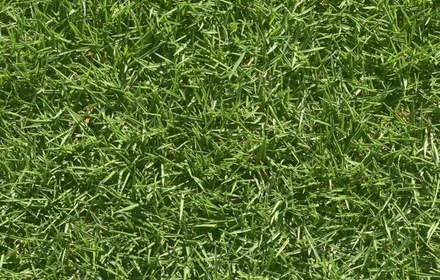
Stadium Zoysia is the variety we point commercial customers and large-property owners toward when the job calls for a Zoysia that can take a beating. It’s built for durability first — a dense, strong turf surface designed to hold up under heavy, repeated use while still keeping the clean, professional appearance Zoysia is known for.
Where Palisades is our general-purpose, best-selling recommendation and Emerald is our showcase, low-traffic option, Stadium sits closer to Palisades on the traffic-tolerance end but leans into full sun and large-scale applications — sports fields, HOA common areas, commercial properties, and big residential lots that see a lot of activity.
Who Stadium Is Best For
- Large-scale and commercial projects that need a durable, professional-looking turf
- Full-sun areas with heavy foot traffic
- Property managers and HOAs looking for a Zoysia that handles wear better than showcase varieties like Emerald
- Homeowners with big yards who want Zoysia’s drought tolerance and lower fertilizer needs at scale
Growing Conditions
| Factor | Stadium Zoysia |
|---|---|
| Sunlight | 6–8+ hours |
| Drought tolerance | Medium–High |
| Foot traffic | Very High |
| Growth rate | Moderate |
| Maintenance level | Medium |
| Coverage | ~450 sq ft per pallet |
Stadium wants more direct sun than Palisades or Zeon — it performs best in wide-open, full-sun conditions, which fits its role as a turf for large, exposed areas like sports fields and commercial lots rather than a shaded residential yard.
Recommended Mowing Height & Frequency
Mow Stadium at 1.5–2.5 inches, every 7–10 days — similar to Palisades, and workable with a standard rotary mower as long as the blades are sharp. Given the scale of the properties Stadium is typically installed on, a well-maintained rotary or a light commercial mower is usually the practical choice over a reel mower.
As with all Zoysia, expect a slower establishment period and a slower spring green-up than St. Augustine or Bermuda — this is normal for the species, not a defect.
Watering Needs
Stadium wants deep, infrequent watering once established — roughly 1 inch per week in summer, half an inch in spring and fall.
- New sod: Water twice daily — once in the morning, once in the evening, never during midday heat — for 2–3 weeks while roots establish (Zoysia is the slowest-rooting of our three grass species, so expect the full 3 weeks), then move to the established schedule once rooted.
- Established turf: Cap watering at twice weekly. On large commercial or HOA properties, this is also the more economical schedule — Stadium’s medium-high drought tolerance means it doesn’t need daily irrigation to stay healthy, which matters at scale.
- Overwatering remains the top driver of large patch disease in any Zoysia, Stadium included.
Fertilizing & MicroLife Recommendations
Stadium’s fertility needs sit at the moderate end for Zoysia — 1–2 lbs of nitrogen per 1,000 sq ft per year is the general Zoysia target, though large or heavily-used properties may lean toward the higher end of that range to support faster recovery from wear.
- MicroLife Multi-Purpose 6-2-4 at a standard rate, 2–3 applications during the growing season, is the right baseline program.
- For properties on heavy Houston clay, MicroLife Humates Plus 0-0-4 applied once or twice a year helps Stadium’s root system establish more deeply, which supports both its drought tolerance and its ability to bounce back from heavy traffic.
- Apply MicroLife Brown Patch 5-1-3 preventively in September and March — large patch is the primary Zoysia disease risk in the Houston area regardless of variety.
- Avoid over-fertilizing, which increases thatch and disease pressure without improving Stadium’s already-solid durability.
Common Problems
- Large patch (Rhizoctonia) remains the top disease concern for Stadium, as with all Zoysia — most often triggered by overwatering going into fall or spring.
- Wear patterns can develop on large properties with concentrated foot traffic (walkways worn into fields, for example) — Stadium recovers reasonably well given its moderate growth rate, but heavily concentrated traffic areas may need periodic overseeding or spot-sodding.
- Slow spring green-up is expected, not a sign of a dead lawn — use the tug test if you’re unsure whether dormant grass is still alive.
Pros & Cons
Pros: Very high foot-traffic tolerance, dense and durable, good fit for large-scale and commercial projects, moderate-to-low fertilizer needs, good drought tolerance.
Cons: Needs more direct sun than Palisades or Zeon, slow establishment typical of Zoysia, best suited to open, sunny sites rather than shaded residential yards.
Ready to Order Stadium Zoysia?
We stock Stadium Zoysia for delivery across Magnolia, Tomball, and Greater Houston, including bulk orders for commercial and HOA projects. Call (281) 259-6375 or get a free quote online.