
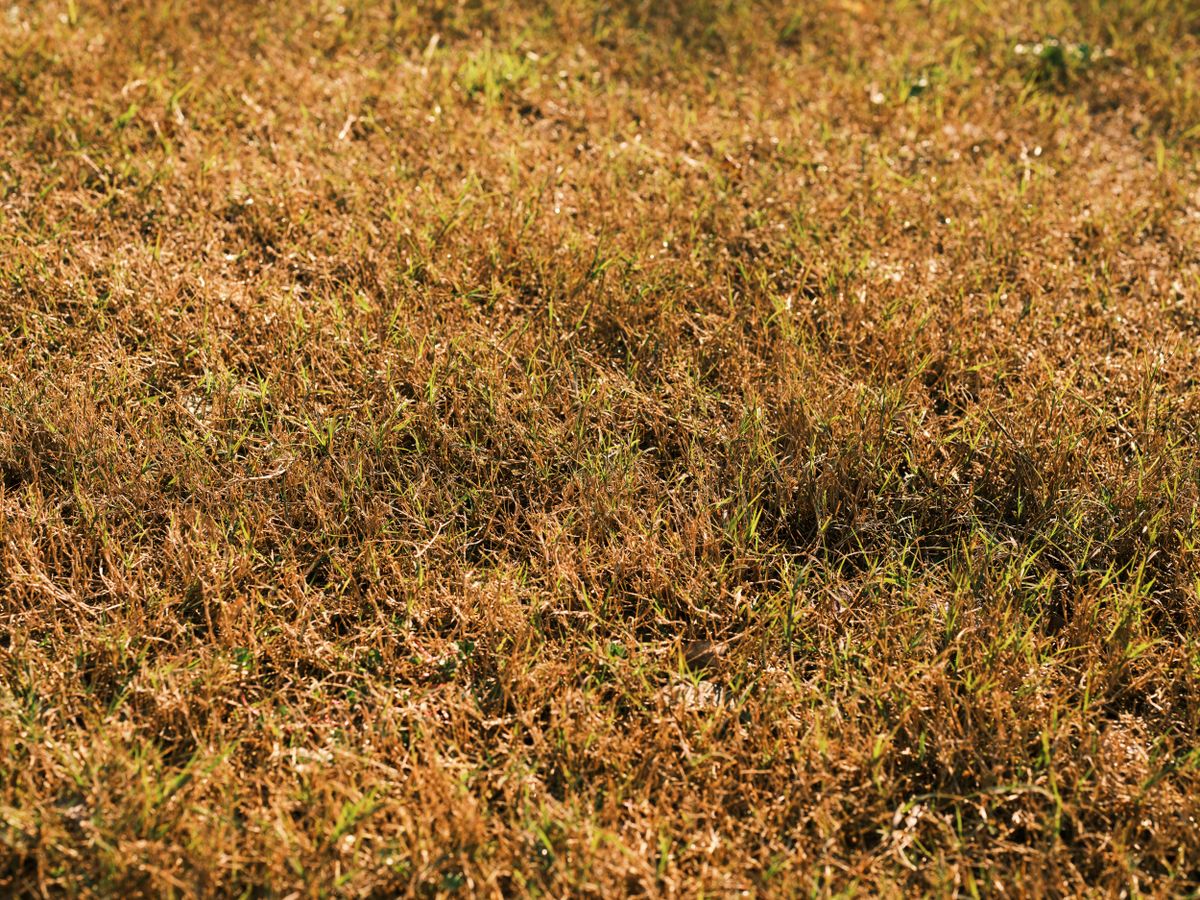
Yellow grass is the single most common call we get. The good news: it’s rarely a mystery once you know what to look for. In Houston, yellowing almost always traces back to one of five causes — and each one has a distinct pattern once you know what to check.
1. Iron Deficiency (Alkaline Soil)
This is the #1 cause of yellowing in Houston lawns, and it’s not really a nitrogen problem — it’s a pH problem. Much of the Houston area has naturally alkaline soil (and irrigation water that skews alkaline too), which locks up iron in the soil so your grass can’t absorb it, even if plenty is technically present.
How to tell: The yellowing shows up as an overall pale, washed-out lime-green to yellow color across large sections of the lawn — not in patches, but broadly. New growth (the newest blades) often looks more yellow than older growth. It tends to get worse in summer heat.
The fix: Apply MicroLife Acidifier 6-2-4. It’s built specifically for this — 12% sulfur to lower soil pH plus iron in a form your grass can actually use. Apply at 15–20 lbs per 1,000 sq ft, and repeat every 3–4 months or whenever yellowing reappears. Most customers see visible improvement within 1–2 weeks.
2. Overwatering
Too much water suffocates roots and washes nitrogen out of the root zone before the grass can use it. It also creates the damp conditions fungal disease thrives in, which can compound the yellowing.
How to tell: The soil feels soggy or spongy underfoot days after your last watering. You might also notice a slight sour smell, or standing water after rain that takes a long time to drain.
The fix: Cut back to 2–3 waterings per week, and always check with the finger test first (stick a finger 2–3 inches into the soil — if it’s still damp, skip that day). Deep, infrequent watering builds deeper roots than daily shallow watering ever will.
3. Underfertilizing
If your lawn hasn’t been fed in 3+ months during the growing season, straightforward nitrogen deficiency is a real possibility, especially for Bermuda, which needs the most nitrogen of any grass we carry.
How to tell: Even, gradual fading to yellow-green over the whole lawn, with slower growth than usual (you’re mowing less often than you used to).
The fix: Apply MicroLife Multi-Purpose 6-2-4 (any grass type) or MicroLife Hybrid 20-0-5 (Bermuda especially, for a faster nitrogen response) at label rate. Never fertilize dormant grass in winter — it won’t help and can stress the lawn.
4. Disease
Fungal diseases like brown patch and large patch cause yellowing before they progress to full brown circular patches. Catching it at the yellow stage is the best time to treat.
How to tell: The yellowing shows up in roughly circular or irregular patches rather than evenly across the lawn, often with a slightly different texture (thinning, matted blades) at the edges. For the full breakdown on identifying and treating this, see our brown patch and large patch guide.
The fix: Apply MicroLife Brown Patch 5-1-3 preventively (especially heading into September) or at first sign of disease, and cut back on evening watering.
5. Dull Mower Blades or Mowing Stress
Dull blades don’t cut grass — they tear it, leaving a ragged, bruised edge on every blade tip that turns brown-yellow within a day or two.
How to tell: Look closely at individual blade tips after mowing. If they’re frayed or torn rather than cleanly cut, that’s your answer. This shows up as a yellow-brown haze across the whole lawn 1–2 days after mowing, then fades as new growth comes in.
The fix: Sharpen or replace mower blades at least once per season (more if you mow a lot of St. Augustine, which dulls blades faster). Also make sure you’re not cutting more than ⅓ of the blade length at once — see our mowing height reference guide for exact heights by variety.
Quick Diagnostic Table
| Pattern | Likely Cause |
|---|---|
| Even, pale yellow-green across whole lawn | Iron deficiency or underfertilizing |
| Soggy soil, sour smell | Overwatering |
| Circular or irregular patches | Disease (brown patch / large patch) |
| Yellow-brown haze after mowing | Dull blades |
| Yellow patches expanding near driveways/walks in summer | Chinch bugs — see our chinch bug guide |
Still Not Sure?
If you’ve checked all of the above and your lawn is still yellow, it’s worth a phone call rather than guessing — the wrong fix (like more nitrogen on a disease problem) can actually make things worse.
Call us at (281) 259-6375 and describe the pattern you’re seeing — we diagnose this over the phone all day, every day. Or pick up MicroLife Acidifier or Brown Patch at our Magnolia or Tomball yard and get a free quote if it’s time for new sod instead.