
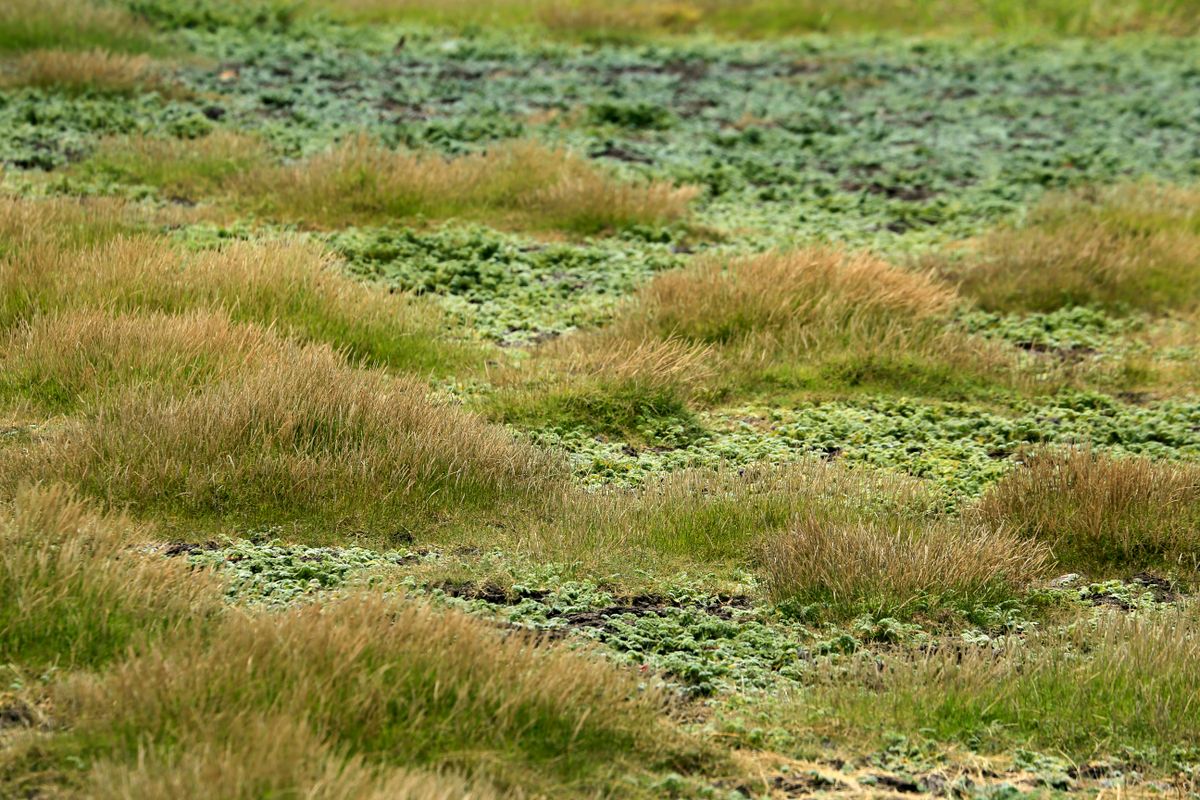
Thin or patchy grass is different from grass that’s turned brown or yellow — the blades that are there might look fine, there’s just not enough of them. That points to a different set of causes than disease or nutrient problems, though the two can overlap.
Cause 1: Foot Traffic Wear
The most common cause of thinning in residential lawns is simple mechanical wear — the same path to the trash cans, the same shortcut across the corner, the dog’s patrol route along the fence line.
How to tell: Thinning follows a clear path or pattern rather than showing up randomly — a worn trail, a rectangle under a swing set, a line along a fence.
The fix: Reduce traffic on the worn area temporarily (a stepping-stone path solves this permanently for high-traffic routes), and overseed or patch with sod once traffic eases. If this is a recurring problem area, consider switching that zone to a heavier-traffic variety — see our best grass for heavy foot traffic guide.
Cause 2: Too Much Shade
Every grass we carry has a minimum sunlight requirement, and thinning is usually the first sign a shaded area is below it — grass doesn’t die outright, it just gradually gets thinner as the plant can’t produce enough energy to stay dense.
How to tell: Thinning is concentrated under trees, near structures, or on the north side of the house, and gets worse as nearby trees grow and cast more shade over the years.
The fix: Confirm your actual sun hours, then match the grass to it — Amerishade St. Augustine tolerates as little as 3 hours of direct sun, well below Raleigh St. Augustine’s 6–7 hour requirement. See our best grass for shade guide for the full comparison. In deep shade under mature trees, no grass will stay fully dense — decorative groundcover or mulch beds are sometimes the more realistic answer.
Cause 3: Disease
Both brown patch/large patch and take-all root rot leave thin, patchy areas behind even after the active disease has been treated — the grass has to regrow into the damaged spots.
How to tell: Thinning follows disease-shaped patches (roughly circular), and you may recall the area looking yellow or brown-circled before it thinned out.
The fix: Treat the underlying disease first (see the linked guides), then patch or overseed once it’s under control — patching before the disease is resolved just gives the fungus new grass to attack.
Cause 4: Poor or Compacted Soil
Grass roots need to breathe. Compacted soil (common in high-traffic areas and anywhere heavy equipment has driven) or thin/poor topsoil over Houston clay limits root growth, which limits how dense the grass above it can get.
How to tell: Push a screwdriver into the soil — if it’s difficult to push more than an inch or two, the soil is compacted. This is common along driveways, in yards after construction, and in older lawns that have never been aerated.
The fix: Aerate (see our lawn aeration guide) to relieve compaction, then topdress with MicroLife Humates Plus 0-0-4 to improve soil structure and root development going forward.
Fixing the Thin Spots Themselves
Once you’ve addressed the underlying cause, you have three options depending on how large the area is:
- Small spots (under 1 sq ft): Usually fill in on their own once the cause is fixed, especially with Bermuda and Zoysia, which spread aggressively via runners.
- Medium spots: Loosen the soil, add a thin layer of topsoil, and patch with sod plugs or small sod pieces matching your existing grass.
- Large areas: Full resod is usually faster and more reliable than trying to nurse a large damaged area back — especially for St. Augustine, which doesn’t spread from seed and repairs itself more slowly than Bermuda.
Just Call Us
Not sure which of these is causing your specific patches? Call us at (281) 259-6375 and describe the pattern — we can usually narrow it down over the phone. If you need patch sod to match your existing lawn or a full resod quote, get a free quote and we’ll get you same-day pricing.