
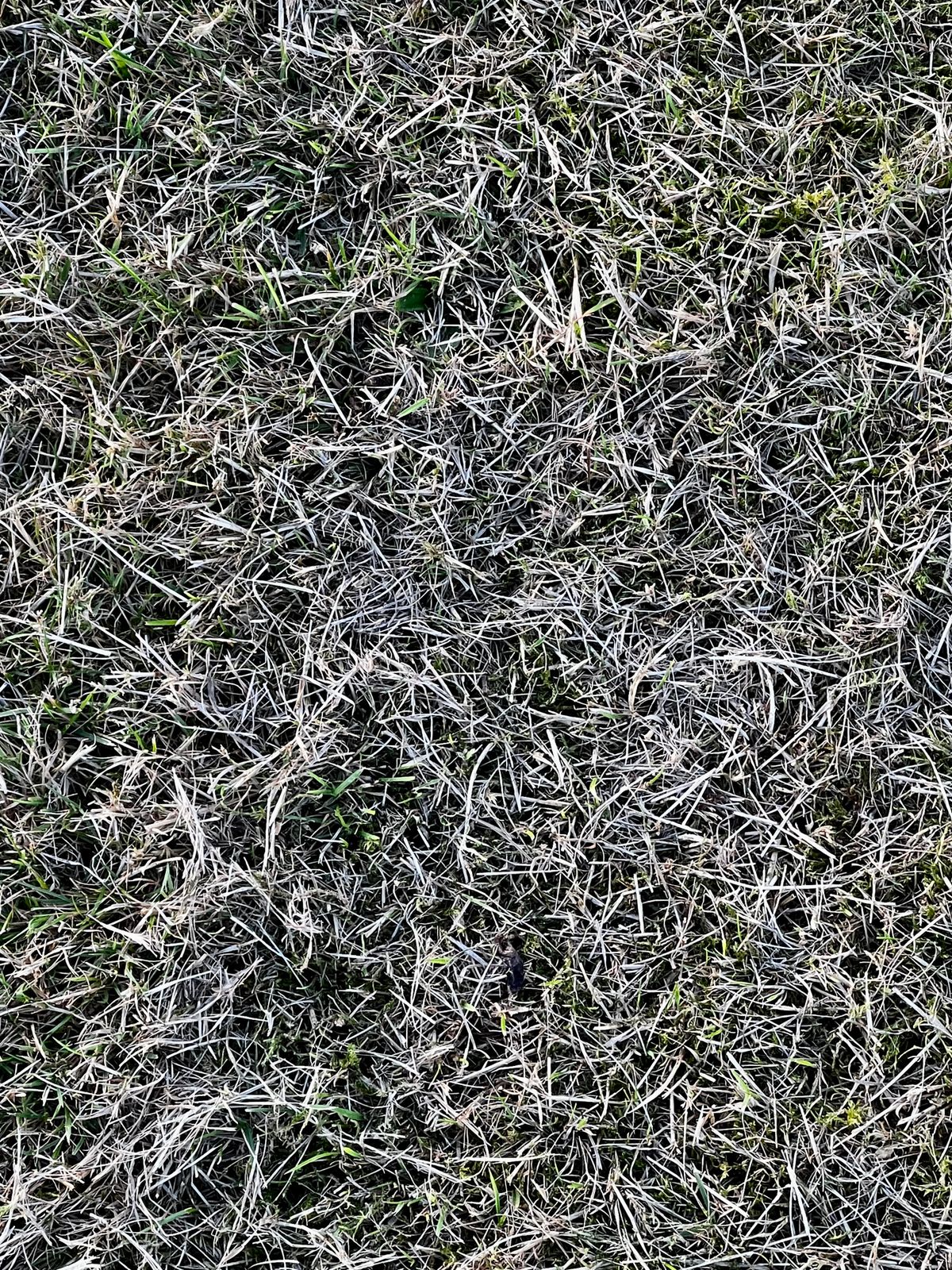
Take-all root rot is one of the more frustrating St. Augustine problems because it doesn’t respond the way you’d expect. You see yellow, thinning patches, you fertilize like you would for any other yellowing — and nothing happens, or it gets worse. That’s the biggest clue you’re dealing with take-all, not a simple nutrient issue.
What It Looks Like
- Yellow, irregular patches that slowly expand over weeks to months — this is a slow-moving disease, not a fast one like armyworms or chinch bugs.
- No response to fertilizer — because the disease attacks the root system, not the leaf blade, feeding the grass doesn’t fix the underlying problem and can sometimes make it look worse by pushing top growth the damaged roots can’t support.
- The root check: Dig up a small section from the edge of an affected patch. Healthy St. Augustine roots are white to light tan and firm. Take-all-affected roots are dark brown to black, short, and rot away easily when you rub them between your fingers — this is the most reliable way to confirm take-all vs. other causes of yellowing.
- Stolons pull up easily with little to no root resistance, similar to the tug test used for checking dormancy, but take-all roots look visibly rotted rather than just dormant.
What Triggers It
Take-all root rot is caused by a soil-borne fungus that’s present in most Houston lawns at low levels most of the time — it only becomes a visible problem when the grass is under stress and its natural defenses are down. Common triggers:
- Stress periods — spring green-up and fall cool-down, when St. Augustine is already working hard to transition.
- Overwatering and poor drainage — the fungus thrives in consistently wet soil.
- High soil pH — alkaline Houston soil (the same issue behind iron-deficiency yellowing) also favors this fungus.
- Excess nitrogen, especially fast-release — similar to gray leaf spot, lush stressed growth is more vulnerable.
- Herbicide stress or compacted soil — anything that stresses the root system opens the door.
Treatment — Focus on Root Health, Not a Quick Fix
There’s no fast cure for take-all root rot. Treatment is about reducing stress and rebuilding root health so the grass can outgrow the fungus over one to two growing seasons.
- Cut back watering to the minimum the lawn needs — overwatering is the single biggest factor keeping the fungus active.
- Avoid high-nitrogen fertilizers while the disease is active. Instead, apply MicroLife Humates Plus 0-0-4 to build root mass and improve soil structure without feeding the fungus the tender top growth it likes to attack.
- Lower soil pH if it’s testing alkaline — MicroLife Acidifier 6-2-4 helps here too, since take-all thrives in the same high-pH conditions that cause iron-deficiency yellowing.
- Raise your mowing height to the top of St. Augustine’s range (3.5–4 inches) to reduce stress on the plant while it recovers — see our mowing height guide.
- Be patient. Recovery is measured in months, through at least one full growing season, not weeks.
Prevention
- Don’t overwater — this is the single most preventable trigger.
- Test and correct soil pH before it becomes a chronic problem — see our soil types guide.
- Avoid stress during transition seasons — minimize heavy traffic, mowing too short, or herbicide application during spring green-up and fall cool-down.
- Build soil biology over time with MicroLife products rather than relying on synthetic fast-release fertilizers, which don’t support the beneficial soil microbes that naturally compete with take-all fungus.
Just Call Us
If you’ve ruled out the faster-moving causes of yellowing and suspect take-all, call us at (281) 259-6375 — we can talk through what you’re seeing and whether a root check confirms it. If a section is too far gone to recover, get a free quote for fresh St. Augustine once the underlying soil issue is corrected.