
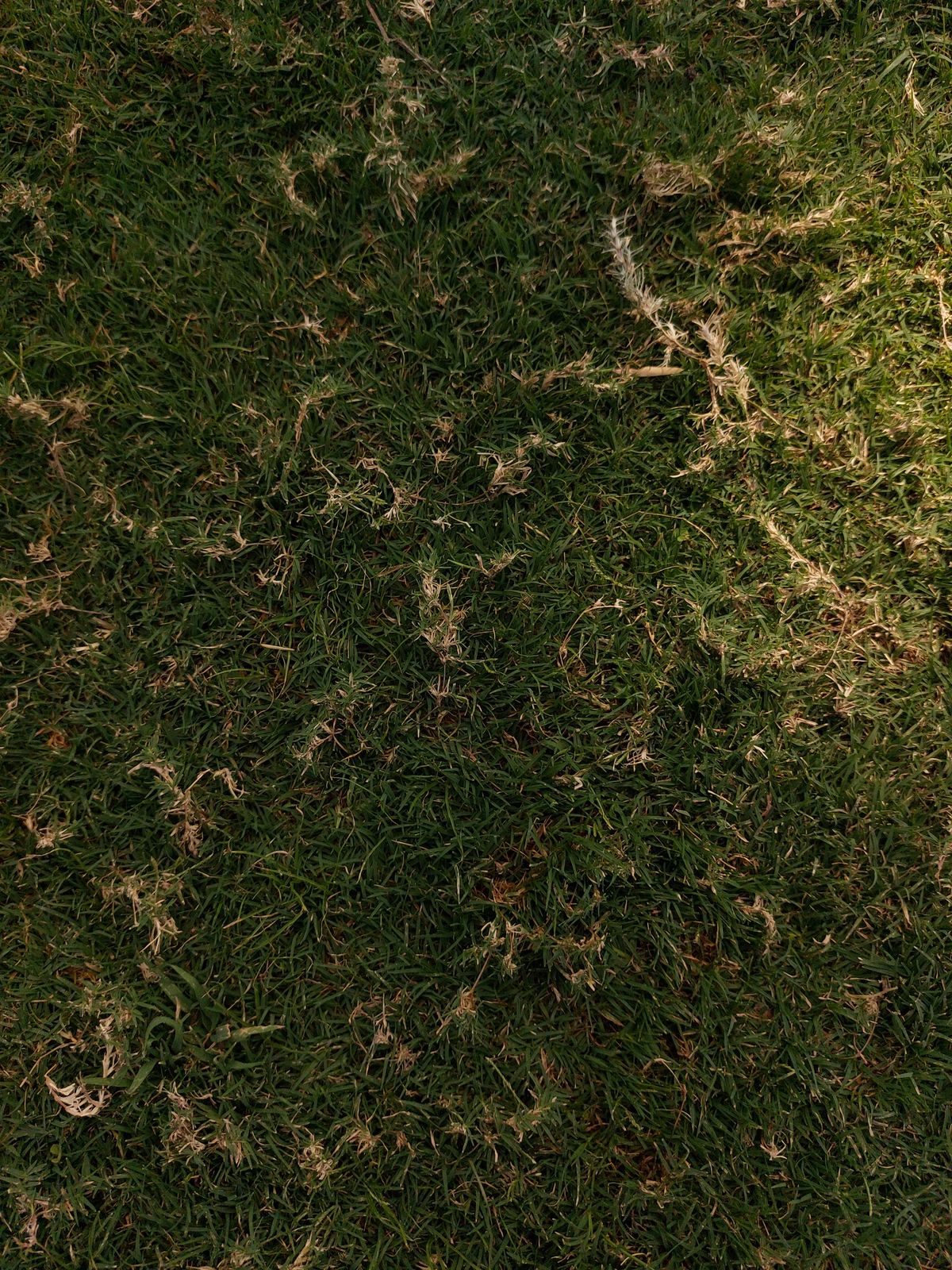
If you’re seeing a patch of yellow grass near your driveway, sidewalk, or a sunny hot spot in the yard that keeps expanding week after week in the middle of summer, chinch bugs are the first thing we’d suspect. They’re the single most common St. Augustine pest we deal with in Houston.
What Chinch Bug Damage Looks Like
- Location: Chinch bugs love heat, so damage almost always starts in the sunniest, hottest parts of the lawn — next to driveways, sidewalks, and south-facing walls that radiate heat.
- Pattern: An irregular yellow patch that looks like drought stress at first, but keeps expanding outward even when you’re watering normally. That’s the giveaway — drought stress stabilizes once you water; chinch bug damage keeps spreading.
- Timing: Peak season is June through September, when it’s hottest and driest.
- Progression: Left untreated, yellow turns to brown, dead grass as the insects kill the blade at the base faster than the plant can recover.
Confirm It’s Really Chinch Bugs: The Float Test
Before treating, confirm you’re actually dealing with chinch bugs and not one of the other causes of yellow patches (see our full yellowing guide if the pattern doesn’t quite match).
- Cut both ends off a large coffee can (or similar cylinder).
- Push it a couple inches into the soil at the edge of an active yellow patch — right where yellow meets green, since that’s where the bugs are actively feeding.
- Fill it with water.
- Wait 5–10 minutes. If chinch bugs are present, they’ll float to the surface — small (about ⅕ inch), with black bodies and white wings folded in an X pattern on their backs. Immature ones (nymphs) are smaller and reddish.
Finding even a handful confirms an active, treatable population.
Treatment
- Apply an appropriate insecticide labeled for chinch bugs on St. Augustine — treat the affected area and a buffer zone a few feet beyond the visible damage, since bugs are usually already spreading past where you can see it.
- Water the area after treatment (unless the product label says otherwise) to move the insecticide down into the thatch layer where chinch bugs live and feed.
- Re-check in 1–2 weeks with another float test. A second treatment is common if the infestation was well established before you caught it.
- Overseed or patch dead areas once the population is controlled — chinch-bug-killed grass doesn’t recover on its own; the crown of the plant is dead, not just stressed.
Why St. Augustine Specifically
Chinch bugs feed by piercing grass blades and injecting a toxin that blocks water movement in the plant — essentially causing the grass to die of thirst even while well-watered. St. Augustine is their preferred host in Houston lawns; Bermuda and Zoysia can get chinch bug damage too but see it far less often.
Prevention
- Avoid over-fertilizing with high-nitrogen products in peak summer — chinch bugs are drawn to lush, tender growth.
- Don’t let the lawn get drought-stressed — chinch bug populations explode fastest in hot, dry conditions, so consistent watering during a Houston summer helps keep numbers down.
- Dethatch if you have a heavy thatch layer (see our dethatching guide) — thatch is where chinch bugs live and hide.
- Treat preventively in June if you’ve had chinch bugs in previous summers — they tend to come back to the same hot spots year after year.
Just Call Us
If you’re not sure whether it’s chinch bugs, drought stress, or something else, call us at (281) 259-6375 and describe the pattern — we field these calls constantly every summer. If chinch bugs have killed a section of your lawn past the point of recovery, get a free quote for fresh St. Augustine to patch it.