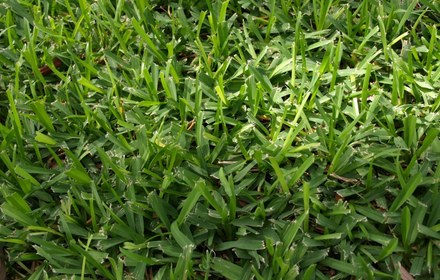
Every Houston yard has that one spot — under a mature live oak, along the north side of the house, behind a privacy fence — where nothing seems to grow. Amerishade exists specifically for that spot. It’s the most shade-tolerant St. Augustine we carry, bred to hold on in as little as 3 hours of direct light per day, and it’s the grass we point homeowners to when Raleigh or even Palmetto has already thinned out and died back.
Amerishade is a specialty product, not a general-purpose lawn grass. We don’t recommend sodding an entire full-sun yard with it — it’s slower-growing and lower-traffic than the other varieties, and it will underperform in bright sun compared to Raleigh. Use it where shade is the problem you’re actually solving.
Who Amerishade Is Best For
- Deeply shaded ornamental zones under mature trees
- North-facing side yards that get little to no direct sun
- Homeowners who’ve already tried Raleigh or Palmetto in a shady spot and watched it thin out
- Decorative areas where appearance matters more than durability under foot traffic
Growing Conditions
| Factor | Amerishade St. Augustine |
|---|---|
| Sunlight | 3 hours minimum |
| Drought tolerance | Low–Medium |
| Foot traffic | Low |
| Growth rate | Slow |
| Maintenance level | Medium |
| Coverage | ~450 sq ft per pallet |
Because it grows slowly, Amerishade also recovers slowly from damage — it’s not the grass for a play area or a dog run. Treat it as a specialty groundcover for spots where almost nothing else will hold color.
Recommended Mowing Height & Frequency
Mow at 3.5–4 inches — the tall end of the St. Augustine range — every 7–10 days during the growing season. In deep shade, taller blades are essential; they’re doing double duty capturing whatever limited light reaches the ground.
Because Amerishade is slow-growing, you’ll likely mow it less often than your sunnier St. Augustine areas simply because it doesn’t put on growth as fast. Resist the urge to cut it shorter to “clean it up” — like all St. Augustine varieties, it has no rhizomes underground, and scalping can kill the plant outright rather than just knocking it back.
Watering Needs
Amerishade’s water needs are lower than Raleigh or Palmetto simply because shaded soil holds moisture longer and loses less to evaporation.
- Water early morning only (5–10am) — this matters even more in shade, where humidity lingers and fungal disease pressure is highest.
- Check soil moisture with the finger test before watering on a fixed schedule; shaded zones often need less frequent watering than the rest of your irrigation system delivers, which can lead to overwatering if you’re not paying attention.
- New sod still needs twice-a-day watering (morning and evening, never midday) for 2–3 weeks to root, regardless of shade.
Fertilizing & MicroLife Recommendations
Fertilize Amerishade lightly — it doesn’t need or use nutrients the way a full-sun grass does, and over-fertilizing shaded turf mostly just feeds fungal disease.
- MicroLife Multi-Purpose 6-2-4 at a standard rate (15–20 lbs per 1,000 sq ft) two to three times during the growing season is usually plenty.
- If color looks pale rather than deep green, MicroLife Acidifier 6-2-4 can help correct iron-related yellowing, which is common in Houston’s alkaline soil regardless of light levels.
- Because shaded, damp conditions are exactly where fungal disease takes hold, apply MicroLife Brown Patch 5-1-3 preventively in September — Amerishade’s shaded environment makes it more disease-prone than sunnier St. Augustine plantings, not less.
- Never fertilize new sod for the first 30 days.
Common Problems
- Take-all root rot and brown patch are more common in Amerishade than in full-sun grasses, simply because shade holds moisture and humidity longer.
- Thinning over time can happen if tree canopy grows denser year over year — if light drops below the 3-hour minimum, even Amerishade will eventually decline, and at that point mulch or a shade-tolerant groundcover may be a better long-term answer than grass.
- Slow recovery from any damage — foot traffic, pet activity, or disease — means prevention matters more here than with faster-growing varieties.
Pros & Cons
Pros: Best shade tolerance of any St. Augustine we carry, solves the “nothing grows here” problem, holds decent color in very low light.
Cons: Slow growth and slow recovery, low foot-traffic tolerance, not suited to full-sun areas, more disease-prone due to the shaded conditions it’s planted in.
Ready to Order Amerishade St. Augustine?
We stock Amerishade for delivery across Magnolia, Tomball, and Greater Houston. Call (281) 259-6375 or get a free quote online and tell us about your shaded problem area — we can tell you quickly whether Amerishade is the right fix.